Watch a recording of the recent launch of “Education for Sustainable Futures: Global Citizenship and the Earth Charter“, an important new Emerald collection. The event features a brief outline of the work, and discussion with contributors on the themes that it covers. Watch it here.
Review of the book, “Education for Sustainability and Global Citizenship: Intercultural, ethical and justice-based approaches” by Nicole Blum in the International Review of Education.
Blum, N. (2025). Education for sustainability and global citizenship: Intercultural, ethical and justice-based approaches. International Review of Education. https://doi.org/10.1007/s11159-025-10209-7
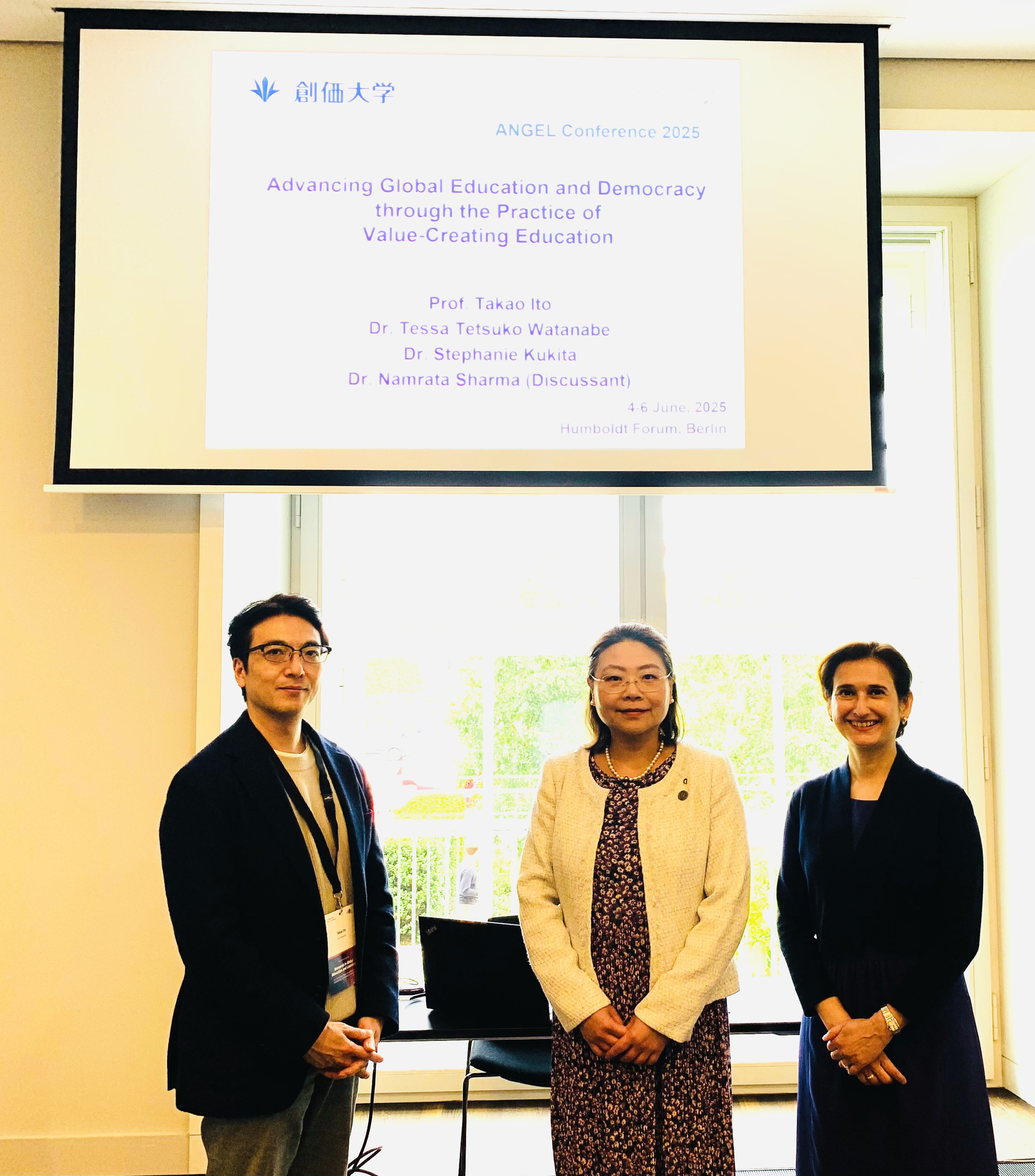
This blog post is an outcome of a panel discussion held at the Academic Network on Global Education and Learning (ANGEL) Conference 2025 in Berlin, Germany between 4-6 June. It discusses the need for political education, sustained critical reflection, and an emphasis on human development as essential for advancing the aims of global education.
In this episode Dr. Deepak Bhatt from Business Talk interviews Dr. Namrata Sharma, faculty State University of New York, who discusses outcomes from her new book, Education for Sustainability and Global Citizenship (Bloomsbury 2025). The interview is aimed at a wider audience, beyond educators and academics, and for all those interested in working on sustainability issues within their own communities.
The recorded interview is available on these podcast channels:
Delighted to announce the arrival of my new book, Education for Sustainability and Global Citizenship: Intercultural, ethical, and justice-based approaches published by Bloomsbury (2025).
It asks how we can address teaching for sustainability and global citizenship for social-ecological justice based on alternative paradigms, and offers practical solutions for planetary citizenship for educators and policymakers, including teaching and curriculum guidelines.
Modified and translated version of an open access journal article in English:
Sharma, N. (2023). Integrating planetary citizenship as a cross-curricular theme and a whole-institution approach: using a value-creating approach to learning. International Journal of Development Education and Global Learning, 15(1). https://doi.org/10.14324/IJDEGL.15.1.03
It was a delight to organize and chair the first panel session held at a major education conference centered on the philosophy of the Soka progenitor Daisaku Ikeda, and his influence on curriculum development and sustainability practices within selected higher education institutions worldwide.
In this session scholars explored the theory and practice of global citizenship education, with a special focus on the United Nations’ Sustainable Development Goals (SDGs) and the 2030 Agenda for sustainability. The objective of the session was to introduce new paradigms, perspectives and practices in higher education in the field of global citizenship education.
The presentations purposefully addressed educational institutions and curriculum development from across different countries which share a common ethical perspective. Soka or value-creating education is an approach to curriculum developed in twentieth century Japan.
The panel explored key terms and definitions being used by faculty in classrooms in relation to teaching for global citizenship and sustainability at Soka institutions and Soka-informed curriculum, including terms such as happiness, peace, sustainability, hope, and service.